
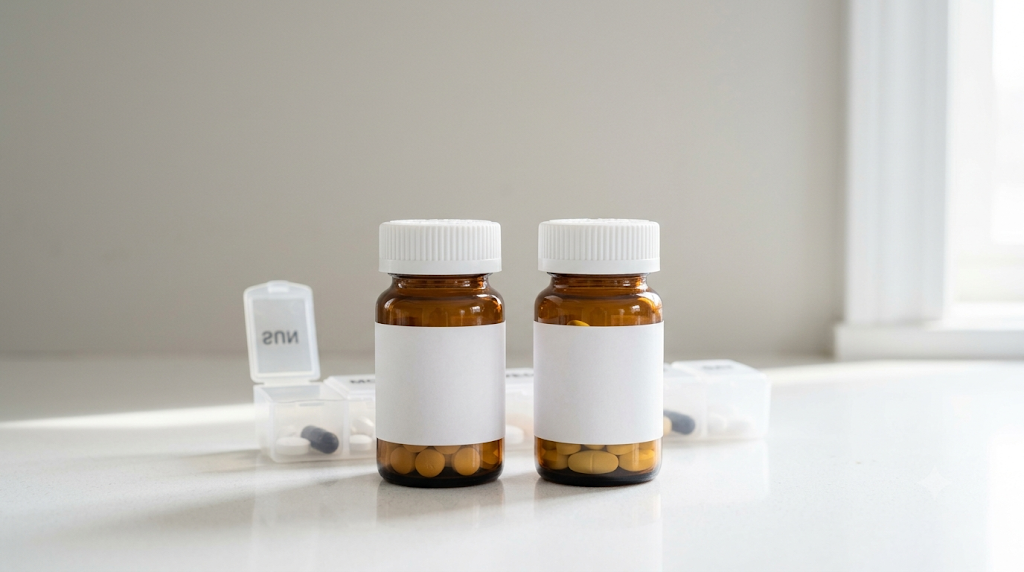
The most common prescription mistakes are taking a medication at the wrong time or dose, stopping it early because you feel better, doubling up on the same active ingredient without realizing it, and not telling the pharmacist about everything else you take. These are not rare slips. A report published by the Centers for Disease Control and Prevention found that among prescriptions that do get filled, roughly 50% are taken incorrectly, most often in timing, dosage, frequency, or duration. Nearly all of these mistakes are preventable with a short conversation and a written list. The pharmacists at Greenleaf Pharmacy in Park City can review your full list for exactly this reason. Below are the eight mistakes worth knowing and how to avoid each one.
How Common Are Prescription Mistakes
Common enough to be measured nationally.
The CDC report published in its Morbidity and Mortality Weekly Report found that about 1 in 5 new prescriptions are never filled at all, and about half of those that are filled are taken incorrectly. Direct health care costs linked to medication nonadherence in the United States are estimated at $100 billion to $300 billion each year.
Errors also send people to the emergency room. A study published in JAMA examining national surveillance data for 2013 and 2014 estimated four emergency department visits for adverse drug events per 1,000 people each year, with 27% of those visits leading to hospitalization. A documented medication error was involved in about 1 in 10 of those visits.
Mistake 1: Taking the Medication at the Wrong Time or Dose
Timing and dose are the most frequent errors, and they are usually honest mix-ups rather than carelessness. A medication meant for bedtime gets taken in the morning. A twice-daily tablet becomes once-daily during a busy week. A dose gets doubled because the first one was forgotten.
How to avoid it:
- Read the label each time for the first two weeks on any new medication
- Ask specifically whether it should be taken with food, on an empty stomach, or away from other medications
- Never double a dose to make up for a missed one without asking the pharmacy first
- Attach each dose to a fixed daily habit rather than a clock time you may miss
Mistake 2: Stopping a Medication Early Because You Feel Better
Feeling better is not the same as being finished. Antibiotics are the classic example, where stopping early can leave an infection incompletely treated. The same logic applies differently to long-term medications for blood pressure, cholesterol, or diabetes, where nothing feels wrong when doses are missed because those conditions often have no symptoms.
Some medications should never be stopped abruptly, including blood pressure and heart medications, seizure medications, blood thinners, steroids, thyroid medication, and many antidepressants. If you want to stop something, whether because of side effects, cost, or doubt about whether you still need it, talk to the prescriber first. There is usually an alternative.
Mistake 3: Doubling Up on the Same Active Ingredient
This one causes real harm, and it happens because the same drug hides under different names.
Acetaminophen is the clearest example. It appears in many prescription combination products, often alongside an opioid, and in a long list of over-the-counter pain, cold, and sleep products. The U.S. Food and Drug Administration has stated that overdose from prescription combination products containing acetaminophen accounts for nearly half of all cases of acetaminophen-related liver failure in the United States. In January 2011, the FDA asked manufacturers to limit acetaminophen in prescription combination products to no more than 325 mg per tablet or capsule and required a boxed warning about the risk of severe liver injury. The FDA has noted that the risk arises primarily when people take multiple acetaminophen-containing products at once and exceed the maximum recommended daily amount within 24 hours.
Anti-inflammatory pain relievers carry a similar layering risk. In July 2015, the FDA strengthened its warning that non-aspirin anti-inflammatory drugs such as ibuprofen and naproxen can increase the chance of a heart attack or stroke, noting the risk can appear within the first weeks of use.
How to avoid it:
- Read the active ingredients on every over-the-counter box, not just the brand name
- Ask before combining any over-the-counter medication with a prescription pain reliever
- Learn both the brand and generic names of what you take
Mistake 4: Not Telling the Pharmacist About Everything You Take
Pharmacists check for interactions, and the check only covers what they can see. Commonly omitted items include vitamins and minerals, herbal supplements, over-the-counter sleep aids and antacids, medications prescribed by a specialist, samples from a doctor’s office, and anything filled at a different pharmacy.
Using two pharmacies without telling either is a frequent cause of missed interactions. Consolidating your prescriptions into one place, which you can do with the prescription transfer form, gives one pharmacist the full picture.
Mistake 5: Splitting or Crushing Pills That Should Stay Whole
Splitting tablets to save money or make swallowing easier seems harmless. For some medications it is fine. For others it is dangerous.
Extended-release and delayed-release products are designed to release medication slowly. Crushing or splitting them can deliver the whole dose at once. Capsules, coated tablets, and some compounded products should also stay intact.
Ask the pharmacist before splitting anything. If swallowing is the problem, there are often better answers, including a different strength, a liquid form, or a compounded formulation prepared in a form you can take.
Mistake 6: Storing Medications in the Bathroom
The bathroom cabinet is the most common storage spot and one of the worst. Heat and humidity from showers can degrade tablets, capsules, and inhalers.
Better practice:
- Store most medications in a cool, dry place away from sunlight, such as a bedroom drawer or a kitchen cabinet away from the stove and sink
- Keep refrigerated medications, including many insulins, at the temperature on the label
- Keep everything out of reach of children and pets
- Leave medications in their original containers so the label stays with the drug
Mistake 7: Sharing or Using Someone Else’s Prescription
Taking a leftover antibiotic from a family member, or borrowing a pain reliever that worked for a friend, skips every safety check that exists. Doses are set by weight, kidney function, other medications, and diagnosis. A drug that is safe for one person can interact badly for another.
The same applies in reverse with pets. Never give an animal a human medication without veterinary direction. Doses differ enormously, and several common human drugs are toxic to dogs and cats. Pet medications can be prepared in flavored or transdermal forms that make dosing far easier.
Mistake 8: Keeping Expired or Discontinued Medications
Old bottles create confusion. A discontinued medication sitting next to a current one invites the wrong tablet at the wrong time, particularly for anyone managing several prescriptions.
Clear out anything expired or no longer prescribed. Ask your pharmacy how to dispose of medications properly rather than putting them in the trash, and check whether a local take-back program is available.
Which Medications Need the Most Attention
Not every medication carries equal risk. A study published in the New England Journal of Medicine estimated 99,628 emergency hospitalizations each year for adverse drug events among United States adults aged 65 and older, and found that just four medications or classes accounted for about two thirds of them.
| Medication or class | Share of those hospitalizations | Why extra care matters |
| Warfarin | 33.3% | Dose accuracy, diet consistency, and interaction checks all affect bleeding risk |
| Insulins | 13.9% | Dosing and timing errors can cause dangerously low blood sugar |
| Oral antiplatelet medications | 13.3% | Bleeding risk rises when combined with certain pain relievers |
| Oral diabetes medications | 10.7% | Missed meals and doubled doses both cause problems |
The study also found that nearly two thirds of these hospitalizations resulted from unintentional overdoses. If you take any medication on this list, a periodic review with your pharmacist is worth the time.
How to Catch Mistakes Before They Happen
- Keep one written medication list, including over-the-counter products and supplements, and update it whenever something changes
- Use one pharmacy so interaction checks cover everything
- Ask three questions with every new prescription: what is this for, how exactly do I take it, and what should I watch for
- Bring the list, or the bottles, to every appointment
- Request refills about a week before you run out
- Ask for a medication review at least once a year, and after any hospital stay
- Say something if you have been skipping doses because of cost or side effects, because there are usually alternatives
Final Thoughts
Most prescription mistakes come from ordinary situations rather than carelessness. A busy week shifts the timing. Feeling better suggests the course is done. Two products contain the same ingredient under different names. A supplement never makes it onto the list. With roughly half of filled prescriptions taken incorrectly nationally, these errors are common, and they are also among the easiest to prevent.
Two habits catch nearly all of them: keep one current list of everything you take, and use one pharmacy that can see all of it. Contact Greenleaf Pharmacy or call the Park City pharmacy at 847-242-8267 and ask a pharmacist to review your list.