A local pharmacy in Park City stands apart from big chains in one simple way. It treats you like a person, not a number. At a local pharmacy, the same pharmacist often knows your name, your medications, and your health history. You get more time, faster service, and direct answers. You also get services many chains skip, like custom compounding, pet medications, and free local delivery. Big chains run on high volume and corporate rules, so care can feel rushed. Greenleaf Pharmacy in Park City, IL is one example of the local model, built around personal care and convenience.
This article breaks down the real differences. You will see how local and chain pharmacies compare on care, services, speed, and price, and why so many chains are now closing.
What Makes a Local Pharmacy Different From a Big Chain
A local pharmacy is independently owned, often by a pharmacist who lives in the same community. A big chain is part of a large corporation with thousands of stores and policies set at a national headquarters.
That ownership difference shapes everything. A local owner answers to patients. A chain store answers to a corporate office and its shareholders.
Independent pharmacies are a bigger part of American health care than many people think. According to the 2025 NCPA Digest, there were 18,960 independent community pharmacies in the United States as of July 2025. They make up nearly 36 percent of all retail pharmacies. The same report notes that no single pharmacy chain has more stores than all independents combined.
Local pharmacies are also the backbone of smaller towns. The NCPA Digest found that nearly two-thirds of independent pharmacies serve communities with fewer than 50,000 residents. For many families, the local pharmacy is the closest and most accessible health care they have.
Personalized Care Is the Biggest Difference
The clearest gap between local and chain pharmacies is personal care.
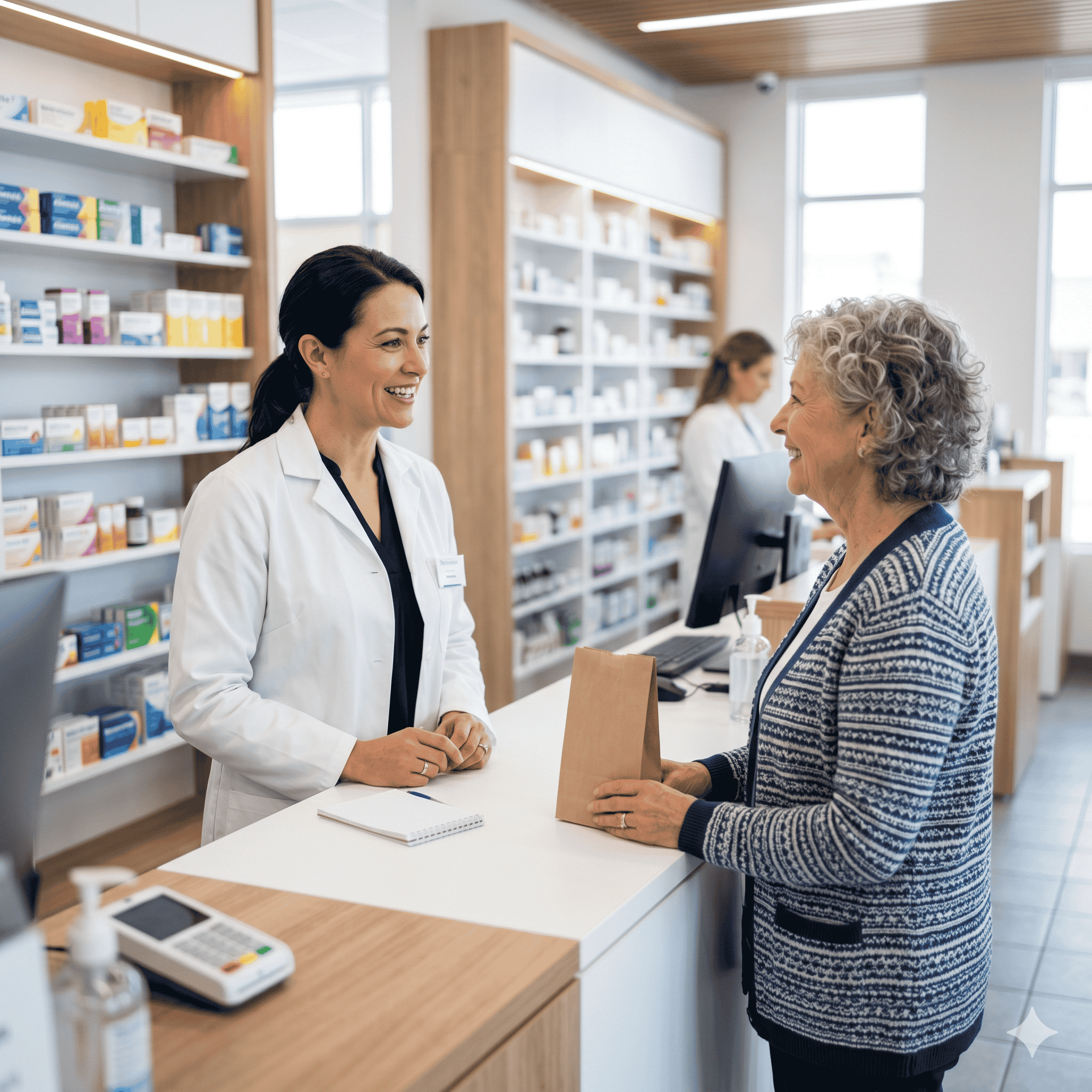
At a local pharmacy, you usually see the same faces. The pharmacist keeps a full picture of your health. They can spot a risky drug interaction, answer questions without rushing, and adjust as your needs change. That relationship builds trust over time.
Chains often struggle here. In the J.D. Power 2024 U.S. Pharmacy Study, only 51 percent of customers said they trust their pharmacist. Just 51 percent said their prescriptions were filled quickly. The study did find that 89 percent of customers understood their pharmacist’s explanations, so the knowledge is there. The problem is time and staffing.
Patient satisfaction data backs this up. Good Neighbor Pharmacy, a national network of independent pharmacies, has ranked highest in customer satisfaction among chain drug store pharmacies 13 times in the last 15 years, according to J.D. Power. Independents keep winning on the experience that matters most to patients.
Services Local Pharmacies Offer That Big Chains Often Do Not
Local pharmacies tend to offer more hands-on services. Many chains have cut these to focus on filling volume.
Common local pharmacy services include:
- Custom compounding. Pharmacists prepare medicine in a special dose, form, or flavor when a standard product does not fit. Greenleaf offers custom compounded medications for needs like allergy-friendly formulas and easier-to-take doses.
- Pet medications. Many local pharmacies fill prescriptions for animals, including flavored or easy-dose options. You can get pet medications without a separate trip to a specialty supplier.
- Diabetic and weight loss support. This includes insulin and newer GLP-1 treatments. Greenleaf provides diabetic and weight loss medications with guidance along the way.
- Vaccinations and OTC products. Flu shots, other immunizations, and affordable over-the-counter products are usually available on site.
- Medication synchronization and delivery. Many local pharmacies line up all your refills on one date and deliver right to your door.
The data shows how active independents are in care. The 2025 NCPA Digest reports that 93 percent of independent pharmacies provided flu immunizations, 92 percent provided non-flu immunizations, 80 percent offered medication therapy management, 73 percent performed blood pressure monitoring, and 45 percent offered compounding. These are real health services, not just sales.
Faster Service and a Real Pharmacist on the Phone
Time matters when you are sick or caring for family.
Local pharmacies usually have shorter lines and fewer delays. When you call, a real staff member often answers instead of a long phone menu. You can reach a pharmacist quickly and get a straight answer.
Chains move a huge number of prescriptions through fewer staff. That can mean longer waits at the counter and on the phone. The J.D. Power finding that only about half of chain customers feel their prescriptions are filled quickly reflects that strain.
Free local delivery adds another layer of speed for many independents. Greenleaf, for example, offers free next-day delivery across Illinois, so you may not need to drive at all.
What About Price and Insurance
Price is the one area where the story is more mixed, and it is fair to be clear about it.
Local pharmacies accept major insurance plans, just like chains. They also save patients money through generics. The 2025 NCPA Digest found that 84 percent of prescriptions at independent pharmacies are filled with a generic drug, which keeps costs down.
There is one catch with some insurance plans. Certain Medicare drug plans use “preferred” pharmacies that offer lower copays, and big chains are favored in these networks. Data presented at an April 2026 MedPAC meeting showed that in 2025, about 66 percent of chain pharmacies were granted preferred status, compared to only 3 percent of independents. So a few plans may steer you to a chain for a lower copay.
The good news is that many local pharmacies match prices, offer discount programs, and are upfront about costs. It is worth asking your local pharmacy what your medication will cost. Often the difference is small, and the added care is worth it.
Why Big Chains Are Closing While Local Pharmacies Stay Open
Here is a shift many people have noticed. The big chains are shrinking fast.
According to the National Community Pharmacists Association, there are 8,000 fewer pharmacies today than a decade ago, a drop of about 15 percent. The majority of those closures were big chains, not independents.
The numbers are striking:
- Rite Aid closed all of its stores nationwide. It fell from a peak of 2,451 stores in 2022 to just 89 by September 2025.
- CVS announced it is closing about 10 percent of its stores, including 271 locations in 2025.
- Walgreens is closing roughly 1,200 stores over three years.
The overall pace of closures is rising too. Data shared at the April 2026 MedPAC meeting showed pharmacy closures more than doubled between 2021 and 2025, climbing from 1,764 to 3,929.
When chains leave, gaps open up. The NCPA Digest reports that roughly 1 in 8 neighborhoods in the United States now meet the definition of a pharmacy shortage area, sometimes called a pharmacy desert. Local pharmacies often step in to fill those gaps. They make up 62 percent of pharmacies in rural ZIP codes, and a study in the North Carolina Medical Journal estimated that about 15 million Americans rely on independent pharmacies for primary health care access.
In short, when a chain shuts its doors, your local pharmacy is often the one that stays.
Local Pharmacy vs Big Chain at a Glance
Here is a quick side-by-side look at the main differences.
| Feature | Local Pharmacy | Big Chain |
| Ownership | Independent, community based | Large national corporation |
| Pharmacist relationship | Often the same person who knows you | Rotating staff, less continuity |
| Wait and phone access | Shorter lines, direct access | Longer waits, phone menus |
| Custom services | Compounding, pet meds, med sync | Limited or not offered |
| Patient satisfaction | Highest rated by J.D. Power | Lowest among store types |
| Generic savings | 84% filled as generics (NCPA) | Varies by location |
| Preferred insurance networks | Less common (about 3%) | More common (about 66%) |
| Store stability | Staying open, filling gaps | Closing thousands of stores |
What This Means for Families in Park City
For families in Park City, the choice is practical.
A local pharmacy gives you a real relationship, faster help, custom services, and the comfort of knowing the doors will stay open. Your money also stays closer to home. The 2025 NCPA Digest found that 61 percent of independent pharmacy owners donated to at least five local organizations in the past year, with 47 percent giving more than $3,000. Local pharmacies support the community that supports them.
If you want a nearby option, the local pharmacy in Park City model is exactly what Greenleaf offers, with personal care plus free next-day delivery across Illinois.
Final Thoughts
A local pharmacy in Park City sets itself apart from big chains through personal care, faster service, custom options like compounding and pet medications, and a steady presence while chains close their doors. The data is clear. Independents rank highest in patient satisfaction, offer more health services, and stay rooted in their communities.
If you are ready to make the switch, it only takes a few minutes. You can transfer your prescription to Greenleaf Pharmacy and start getting care that treats you like a neighbor, not a number. Call 847-242-8267 or stop by 401 S Greenleaf St, Suite 2, Park City, IL to get started.